

Available Distribution Types
Fanfare supports six distribution types:How Distributions Work
Every distribution follows a similar pattern: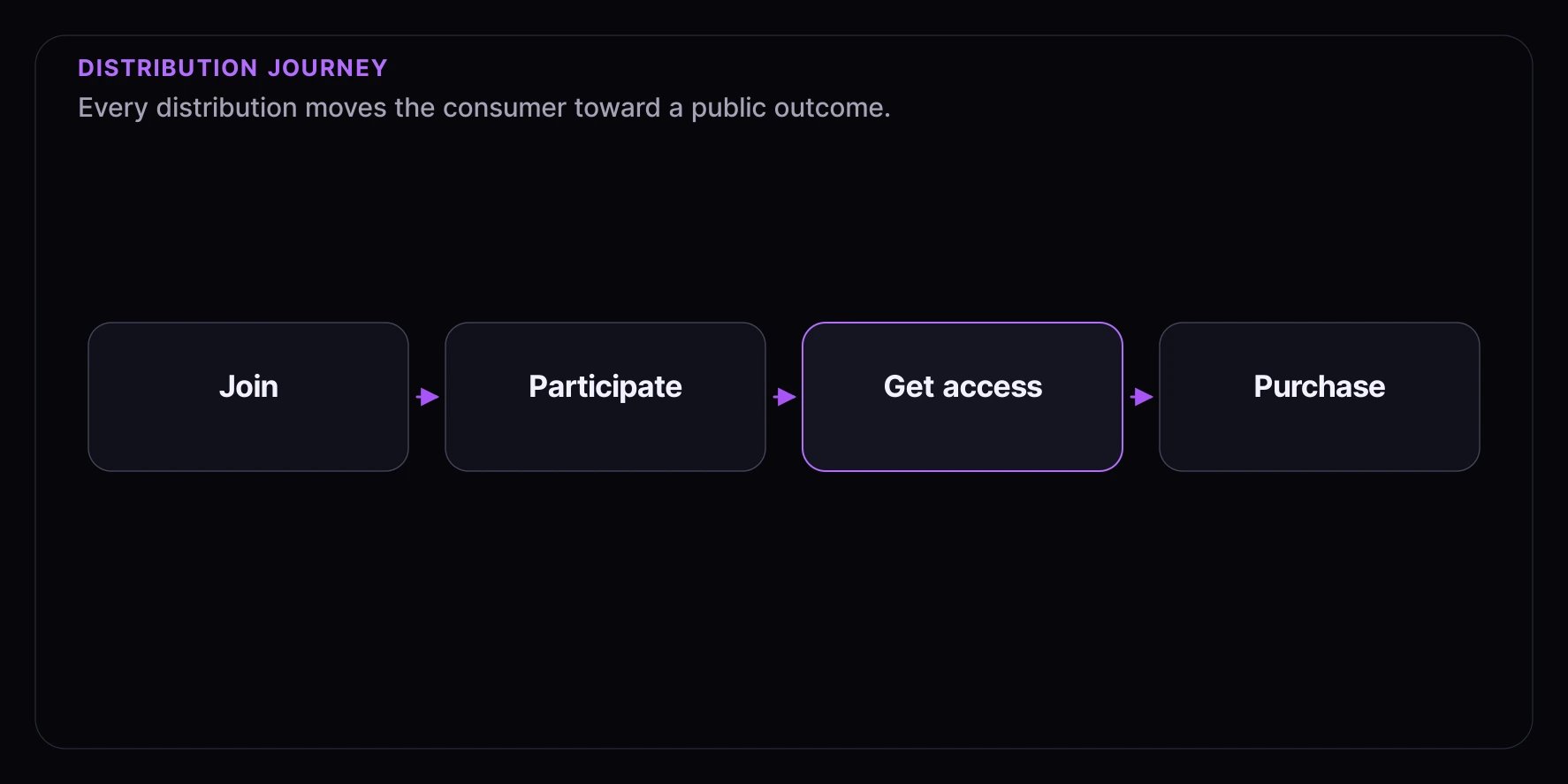
1. Join
Consumers enter the distribution. Depending on the type, this might mean:- Joining a queue
- Entering a draw
- Placing a bid
- Selecting a time slot
2. Participate
Consumers actively participate according to the distribution method:- Queue: Watch their position move forward
- Draw: Wait for the selection
- Auction: Monitor bids and place new ones
- Appointment: Confirm their booking
3. Get Access
When it’s their turn, consumers receive access to checkout. This includes:- A limited time window to complete their purchase
- Clear instructions on next steps
- Real-time countdown
4. Complete Purchase
Consumers complete their purchase within the access window. If they don’t complete in time, their access expires.Distribution Timing
Each distribution has customer-facing timing derived from its configured window:
Some distributions add outcome timing. Draws use
drawAt for winner selection, and auctions use settleAt for settlement timing.
Access Windows
When consumers receive access, they get a time-limited window to complete checkout:
Best practices for access windows:
- 5-10 minutes for simple checkouts (one item, saved payment)
- 15-30 minutes for complex purchases (multiple items, new payment info)
- Always set an expiration to ensure fair access for waiting consumers
Guest vs. Verified Access
You can control whether consumers need to verify their identity:
Guest support depends on the distribution type and launch configuration:
Capacity Controls
Different distributions have different capacity options:Queue
- Queue capacity — Maximum people waiting at once
- Admission rate — How many people access checkout per minute
- Total admissions — Maximum total people who can purchase
Draw
- Entry capacity — Maximum entries accepted
- Winner count — How many winners to select
Auction
- Typically single-item (winner is highest bidder)
Appointment
- Slot capacity — How many bookings per time slot
- Time slots — Available booking times
Choosing the Right Distribution
Here’s a decision guide: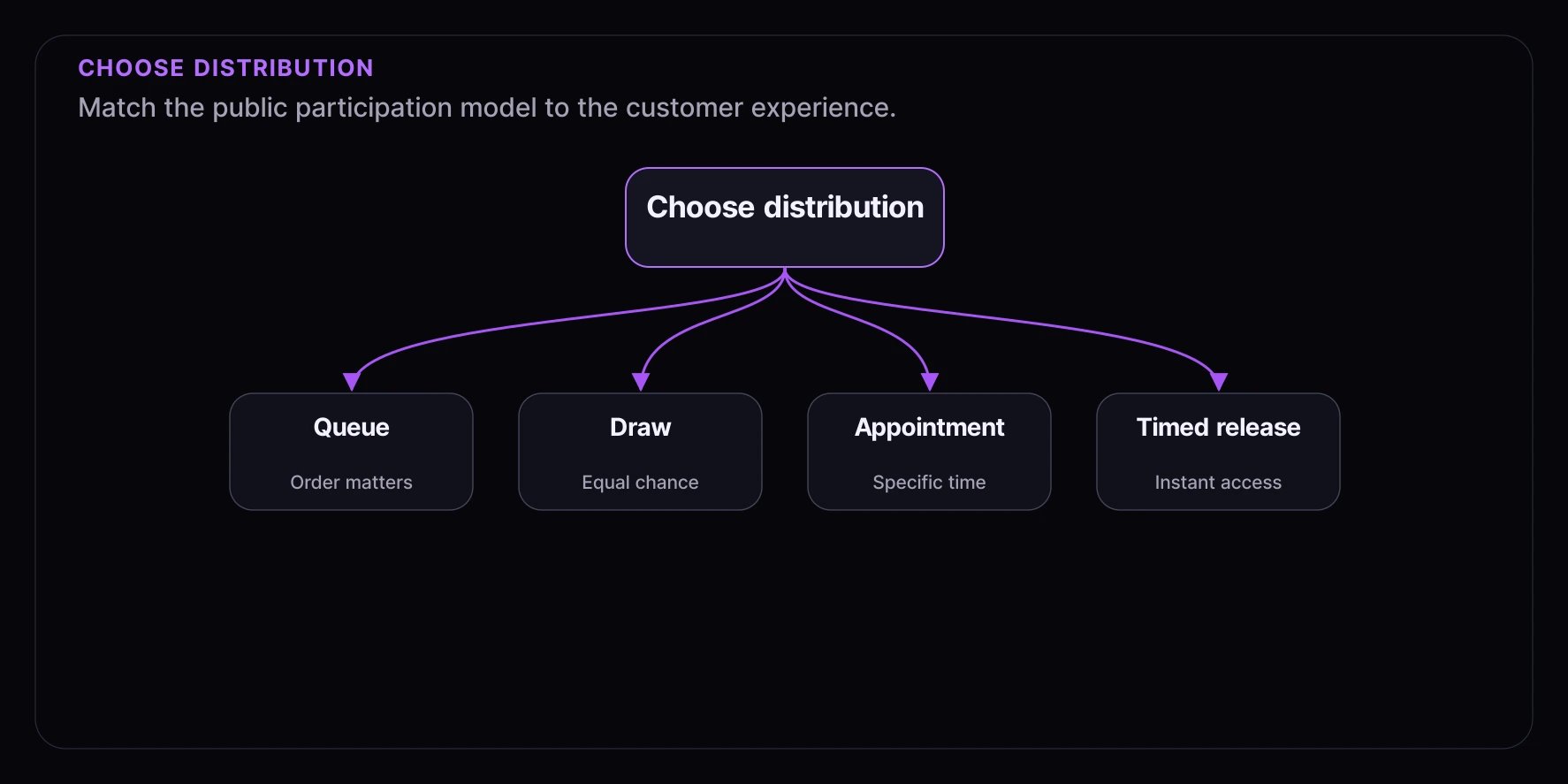
Queue
Best for: High-demand product launches where first-come-first-served feels fair Consumer experience: Join the line, watch position update, get access when it’s their turn Example: Sneaker drops, concert tickets, limited edition productsDraw (Lottery)
Best for: Situations where demand far exceeds supply and random selection feels most fair Consumer experience: Enter the draw, wait for selection, winners notified Example: Exclusive collaborations, oversubscribed events, fairness-focused brandsAuction
Best for: Unique items where price discovery is important Consumer experience: Place bids, monitor competition, highest bid wins Example: Art, collectibles, one-of-a-kind itemsAppointment
Best for: Services or pickups that need scheduling Consumer experience: Browse available times, book a slot, receive confirmation Example: Store appointments, consultations, pickup schedulingTimed Release
Best for: Simple access at a specific time without queuing Consumer experience: Countdown to release, instant access when it opens Example: Flash sales, member-exclusive access, promotional windowsWaitlist
Best for: Capturing interest before launch or handling overflow Consumer experience: Sign up, receive notification when available Example: Pre-launch interest, sold-out items that may return, overflow from other distributionsNext Steps
Learn more about each distribution type:- Queue Distribution — First-in-first-out waiting lines
- Draw Distribution — Random lottery selection
- Auction Distribution — Competitive bidding
- Appointment Distribution — Time slot booking
- Timed Release Distribution — Instant access at a time
- Waitlist Distribution — Interest capture