

How Auctions Work
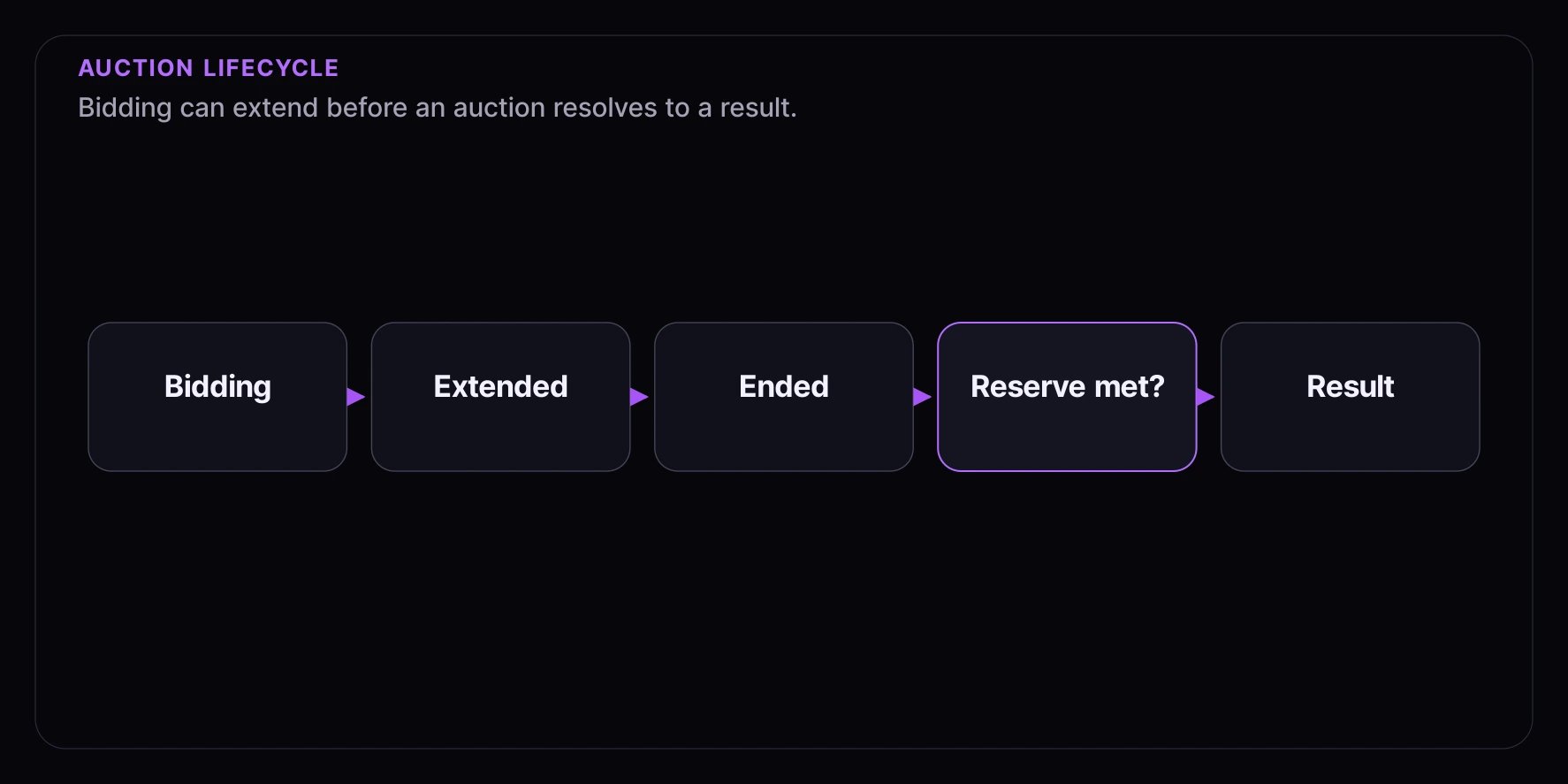
Bidding Phase
- Auction opens at the scheduled start time
- Consumers place bids (must exceed current highest bid by the minimum increment)
- Current highest bid is visible to all bidders
- If auto-extend is enabled, late bids extend the auction to prevent sniping
Settlement Phase
- At the end time (including any auto-extension), bidding closes
- Highest bidder wins (if their bid meets or exceeds the reserve price)
- Winner receives access to complete their purchase
- Non-winners are notified of the result
The Consumer Experience
During Bidding
Consumers see:- Current highest bid
- Minimum next bid amount
- Time remaining until auction ends
- Whether the reserve price has been met
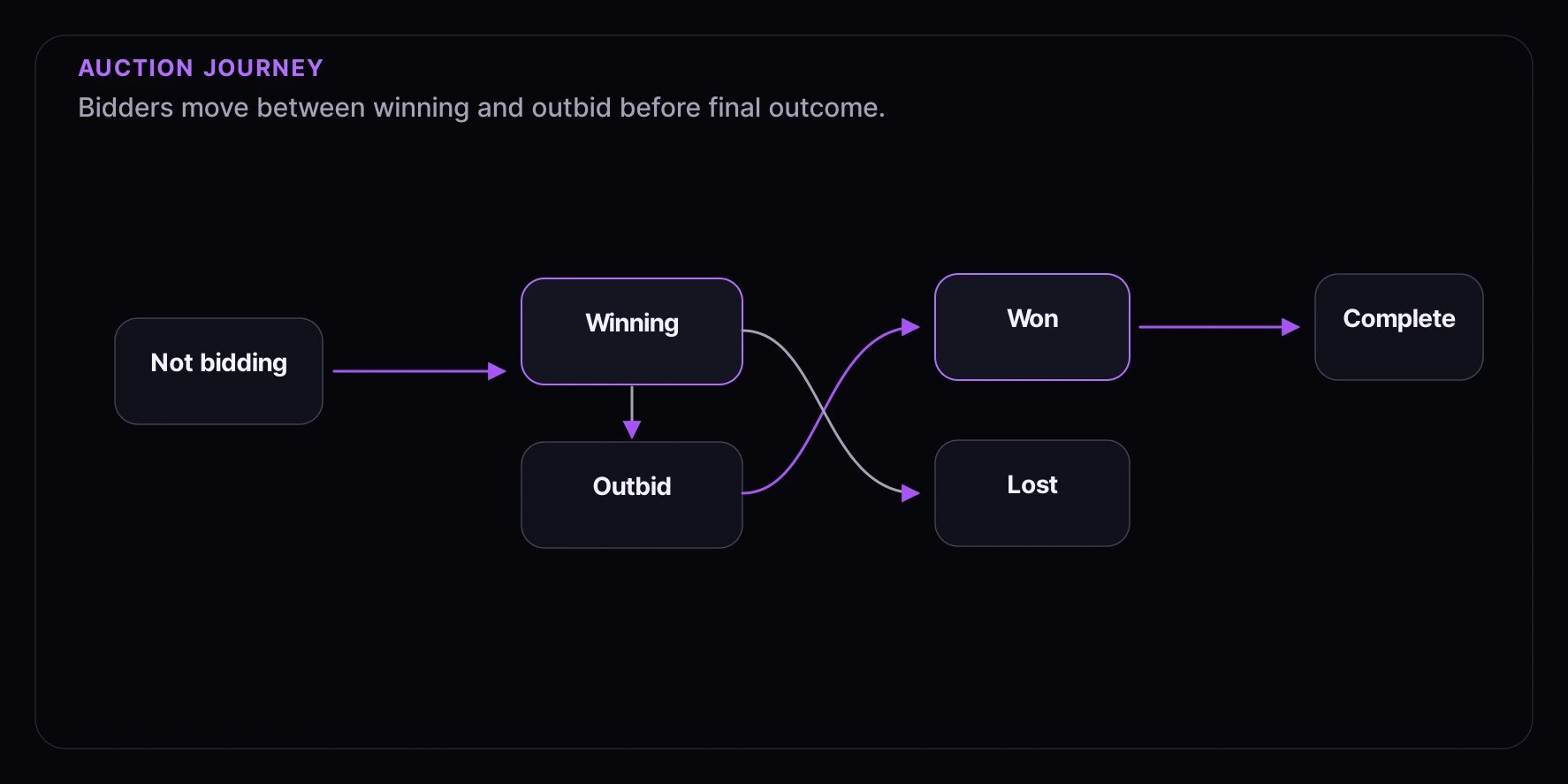
- Their current bid status (winning or outbid)
Real-Time Updates
Bidders receive instant updates when:- A new high bid is placed
- They’ve been outbid
- The auction time extends due to a late bid
- The auction ends
When the Auction Ends
If you won:- Congratulations notification
- Link to complete your purchase at the winning bid price
- Time limit to complete (before access expires)
- Notification of final result
- Optional: Information about similar upcoming auctions
Completing Your Purchase
Winners have a limited time to complete checkout:- Checkout window — Winners receive a link to complete their purchase within a set time (e.g., 24 hours)
- If the winner doesn’t complete — The item remains unsold; you can contact the winner or relist
- No automatic re-offer — Unlike draws with backfill, auctions don’t automatically offer to the next-highest bidder
Consumer Journey
When to Use Auctions
Configuration Options
Reserve Price
The minimum price required for a sale to complete:- With reserve: Item only sells if bidding reaches this amount
- No reserve: Item sells to highest bidder regardless of amount
- If reserve isn’t met, auction ends with no winner
- Set reserve at roughly 70% of expected value
- Too high = no bids, auction fails
- Too low = may undersell valuable items
Minimum Bid Increment
The minimum amount each new bid must exceed the current highest bid:- Higher increments (e.g., 100): Faster price discovery, fewer bids
- Lower increments (e.g., 5): More competitive bidding, more engagement
- High-value items (50-$100 increments
- Mid-range items (1000): 25 increments
- Lower-value items (under 1-$5 increments
Auto-Extend
Prevents last-second “sniping” by extending the auction when late bids are placed:- How it works: If a bid is placed in the final 60 seconds, the auction extends at most once by the configured duration
- Example: A 2-minute extension triggers when a bid arrives in the last minute
- One-time extension: Further late bids during the extension do not extend the auction again
- Gives all bidders a fair chance to respond to last-minute activity
- Encourages competitive bidding in the final stretch
- Prevents frustration from losing to last-second bids
Guest vs. Verified Access
For auctions, we strongly recommend requiring verified accounts:- Bidding involves payment commitment
- Prevents duplicate accounts
- Reduces fraudulent bids
Best Practices
1. Set Appropriate Reserves
Balance seller protection with buyer engagement. A reserve that’s too high means no bids; too low means potentially underselling.2. Use Auto-Extend
Enable auto-extend (2-5 minutes recommended) to prevent sniping and ensure fair bidding.3. Choose Bid Increments Wisely
Match increments to item value—larger increments for expensive items, smaller for affordable ones.4. Require Verified Accounts
Since auctions involve payment commitments, require consumers to have verified accounts before bidding.5. Communicate Clearly
Always show bidders:- Current high bid
- Minimum next bid required
- Time remaining
- Reserve status (met or not met)
- Extension notifications
Common Patterns
Standard Single-Item Auction
- Duration: 5-7 days
- Reserve: 70% of expected value
- Bid increment: $25
- Auto-extend: 5 minutes
- Authentication: Verified consumers only
Flash Auction
Short duration, creates urgency:- Duration: 1-4 hours
- Reserve: None (starts at $1)
- Bid increment: $10
- Auto-extend: 1 minute
- Authentication: Verified consumers only
Charity Auction
Maximize donations:- Duration: 1-2 weeks
- Reserve: Based on retail value
- Bid increment: $50
- Auto-extend: None (fixed end time)
- Authentication: Verified consumers only
Currency and Pricing
Auctions use your account’s configured currency. All monetary values (reserve price, bid increments, bids) are displayed in that currency with proper formatting.Related Concepts
- Distributions Overview — Common distribution concepts
- Queue Distribution — First-come, first-served alternative
- Draw Distribution — Random selection alternative
- Appointment Distribution — Time-slot booking
- Timed Release Distribution — Instant access at scheduled time
- Waitlist Distribution — Interest capture and notifications
- Products — Product configuration and pricing