

How Fanfare Works
When you launch a high-demand product or event, Fanfare helps you manage the consumer experience by controlling who gets access, when, and how.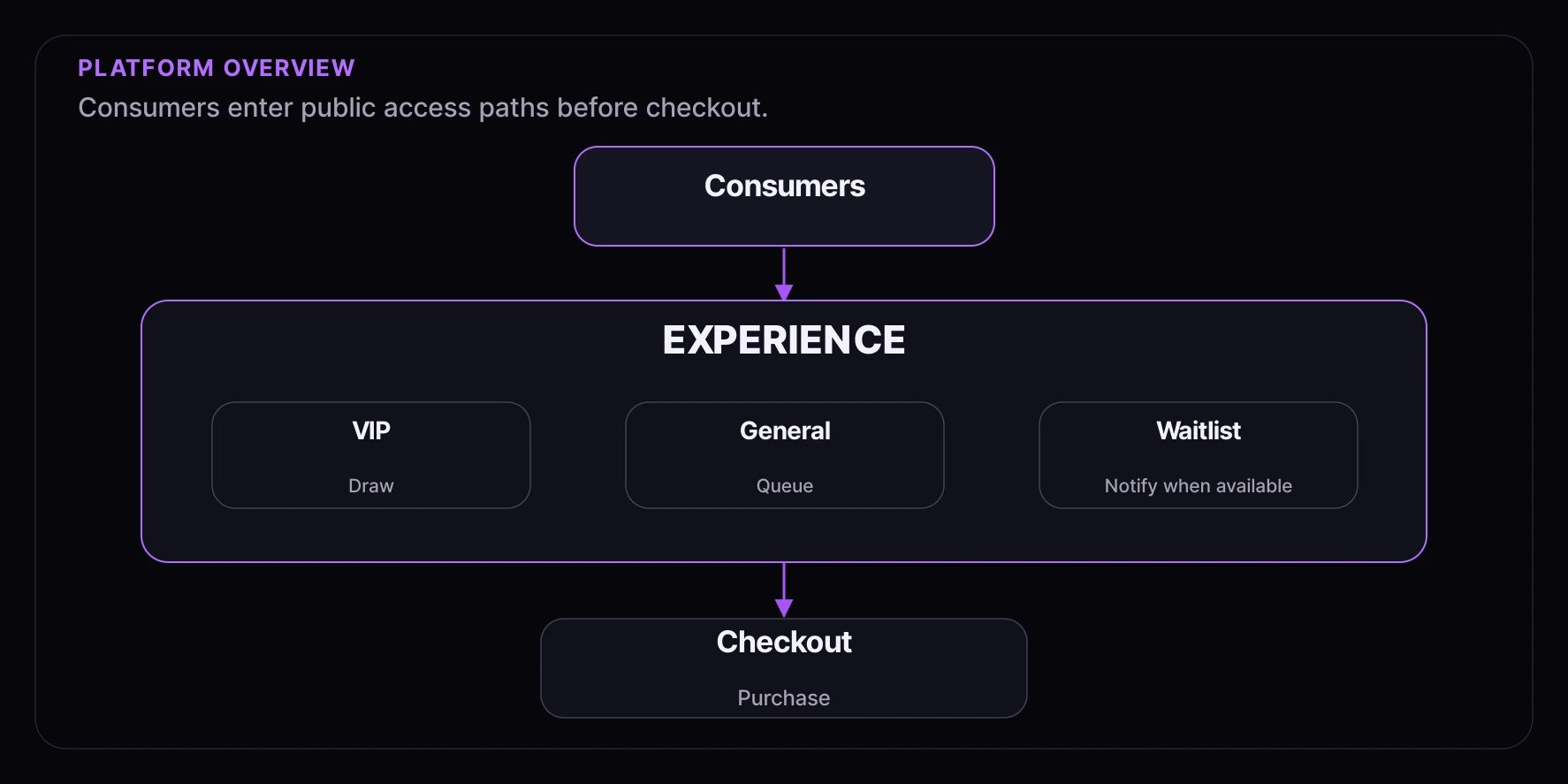
Core Concepts
Experiences
An Experience is your product launch, sale event, or access-controlled offering. Think of it as a campaign that groups together everything needed to manage consumer access. Experiences define:- When it opens and closes — Control exactly when consumers can participate
- What products are available — Connect your products to the experience
- How consumers get access — Through queues, draws, auctions, or other methods
Distribution Types
A Distribution is the method that controls how consumers gain access to purchase. Fanfare supports several types:
Learn more about Distribution Types →
Consumers
Fanfare tracks your consumers as they participate in experiences. Consumers can be:- Guests — Shopping without an account (guest checkout)
- Registered — Have provided email or phone
- Verified — Confirmed their identity via email or phone
- Loyalty score — Based on purchase history and engagement
- Activity level — Recent engagement patterns
Audiences
An Audience is a group of consumers you want to target. Use audiences to create exclusive access for specific groups:- VIP consumers — Based on purchase history or loyalty
- Newsletter subscribers — Synced from your email platform
- Invite lists — Manually curated for exclusive events
Products
Connect your Products to experiences to make them available for purchase. Fanfare supports:- Variants — Different sizes, colors, or options
- Inventory tracking — Optional stock management
- Media assets — Images and descriptions
The Consumer Journey
Here’s what a typical consumer experience looks like: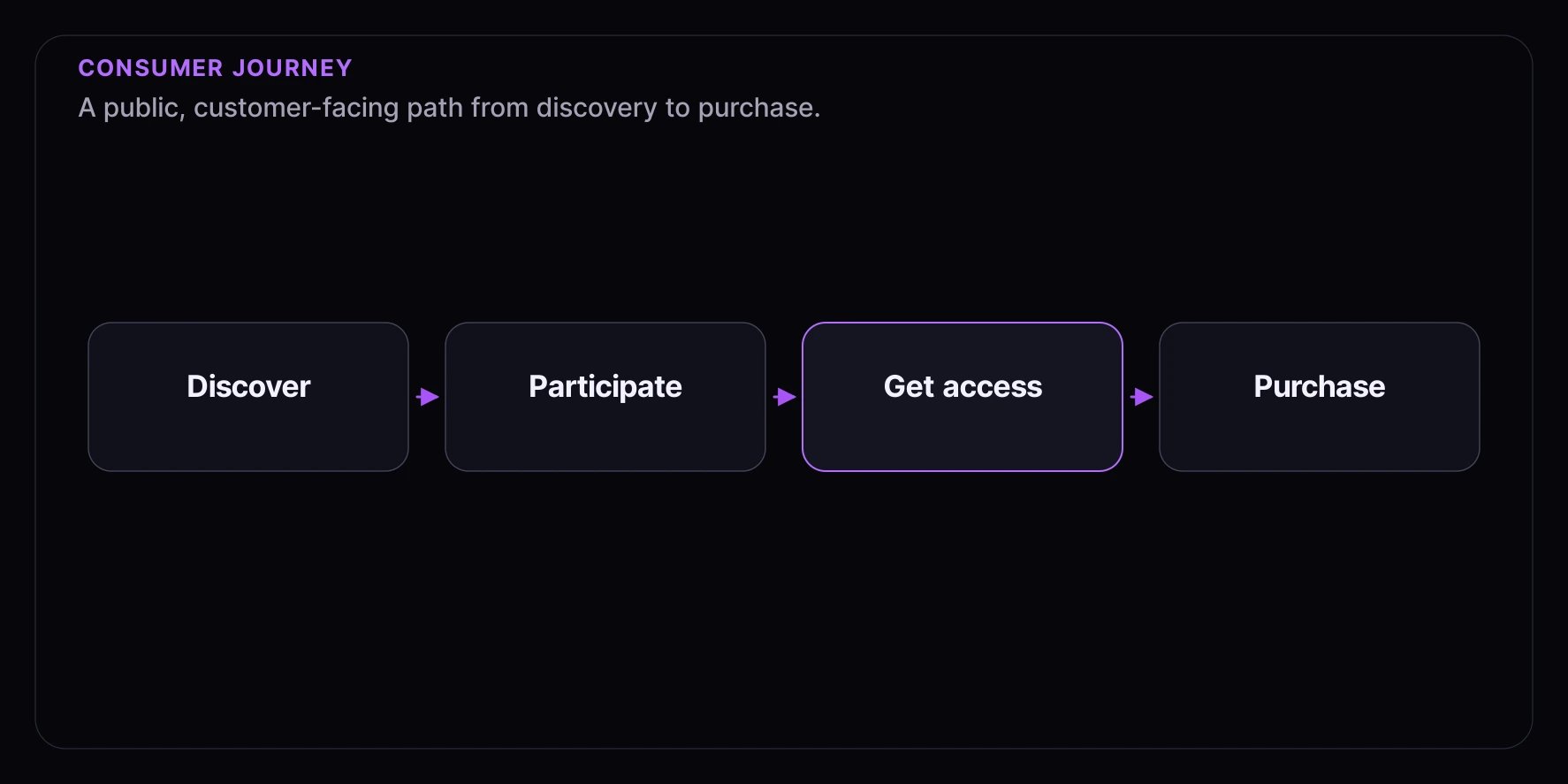
Instant Updates
Consumers see their status in real time:- Queue position and estimated wait time
- Current high bid in auctions
- Draw entry confirmation
- Countdown to access
Choosing the Right Approach
Next Steps
- Experiences — Learn how to set up your first experience
- Distribution Types — Understand each distribution method
- Consumers — Learn about consumer identity and scoring